
"We Wanted People Just to Feel Good in the Moment" -- Michelle Wahler, Co-Founder and Former CEO of Beyond Yoga
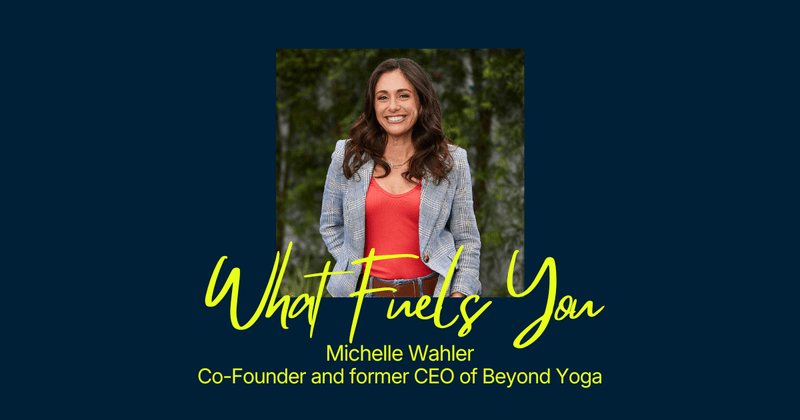
Michelle Wahler Co-Founder and Former CEO, Beyond Yoga
Michelle Wahler
Co-Founder and Former CEO, Beyond Yoga
Michelle Wahler co-founded Beyond Yoga in 2005 with Jodi Guber Brufsky, building the size-inclusive activewear brand from a self-funded startup into a global business with tens of millions of units sold, a thriving e-commerce platform, and six retail stores, before leading its $400 million acquisition by Levi Strauss and Co. in 2021 and serving on Levi's executive leadership team through early 2024. She was named Ernst and Young Entrepreneur of the Year in 2021 and honored as a DEIA Visionary by the Los Angeles Times in 2023. She began her career in graphic design at People magazine and Harper's Bazaar in New York, and studied graphic design at the University of Florida. She is based in Los Angeles with her husband Jesse Adams, who served as COO and CFO of Beyond Yoga, and their two children.
$400M
Acquisition price paid by Levi Strauss in 2021
20
Years Michelle led Beyond Yoga as CEO
$0
Outside capital raised before acquisition
6
Retail stores opened under Levi's ownership
| Time | Topic |
|---|---|
| 00:00 | Rapid fire -- Whoop bracelets, Die With Zero, East Coast energy on the West Coast, and why kids making coffee every morning is a reasonable delegation strategy |
| 09:00 | Growing up in Maryland -- A shy kid with a 6-year gap to her brother, a dad who ran Kent Mill Records and Music, and watching her family lose their home when MP3s and big-box retailers destroyed the business |
| 16:00 | University of Florida and the guidance counselor who changed the plan -- Dropping pre-med, discovering graphic design, being told only 22 people make it into the program, and saying "of course I'll get in" |
| 23:00 | Moving to New York with no job -- A sublet in SoHo with bowling alley furniture, waiting tables after 9/11 while slipping graphic design cards to every table, and the nail salon connection that led to People magazine |
| 30:00 | People, Harper's Bazaar, and Unsweetened -- Discovering how much photoshopping was happening on supposedly candid celebrity photos, and starting a t-shirt business from illustrated portraits drawn for friends' birthdays |
| 37:00 | The LA Gift Show and a midnight file -- How Michelle met Jodi Guber Brufsky, sent back a redesigned file at midnight, and got a call the next morning saying "our relationship is about to change" |
| 43:00 | Building Beyond Yoga without outside capital -- Why Michelle and Jodi turned down investors to protect their values, the size-inclusive bet that retail buyers said they did not need, and the discovery of space dye fabric |
| 51:00 | Manufacturing in LA and bringing Jesse in -- Why staying local gave Beyond Yoga flexibility and community, and how Michelle announced her husband as interim CFO and COO without actually asking him first |
| 58:00 | Hiring for kindness and scaring candidates on purpose -- Never selling the opportunity, always describing how hard it would be, and why slow to hire matters more when the entire team invests in onboarding |
| 65:00 | The cold LinkedIn message from Levi's -- Michelle almost missed it, thought it was a collaboration inquiry, and ended up negotiating a $400 million acquisition with her husband, an attorney, and a very small circle of trust |
| 74:00 | Life inside a publicly traded global company -- Learning what you can and cannot say when your employer is traded on an exchange, and having conversations about protecting employees in Russia during the Ukraine invasion |
| 80:00 | Stepping away and what comes next -- Why leaving felt like dropping a kid at college, starting a public Instagram for the first time after 20 years, the family foundation, and what actually fuels Michelle Wahler |
The Kid Who Watched Her Father Lose Everything, and Decided to Build Differently
Michelle Wahler grew up in Maryland in a household shaped by entrepreneurship and then by its collapse. Her father ran Kent Mill Records and Music, a business she loved visiting on weekends as a child, drawn to the energy of the stores and the conversations about how the business worked. She grew up assuming she would eventually take it over. Then MP3s arrived, and Best Buy and Circuit City started selling CDs at near-zero margins to drive foot traffic, and companies like her father's were caught in a position they could not survive. She watched her father lose the business he had built, watched him try to reinvent himself, watched her mother go back to work as a hairdresser, and watched her family lose their home.
She was a shy kid, not particularly self-confident, by her own description very different from the adult she became. The gap to her brother was six and a half years, large enough that most of her childhood was spent largely on her own. What she absorbed from her father's story was not a fear of entrepreneurship but a set of instincts around caution, around not overextending, around knowing what a business can and cannot survive. Those instincts would later manifest as a stubborn refusal to take outside capital, a commitment to manufacturing in LA where she could see what was happening, and a habit of telling Jesse to spend more money when everything in her said hold back.
"I saw my dad lose his business that he built. And I think that was really sad to watch. And why I also saw him try to, like, reinvent himself. And that was, that was hard for him. And, you know, I saw what that did to my family."
She got scholarship money and went to the University of Florida, where her father pushed her to go even though he wanted her closer, because he did not want her weighed down by what was happening at home. She arrived planning to study business, walked into orientation, sat down to sign up for economics and accounting, looked at her own face, and found a graphic design class instead. A guidance counselor named Leslie told her that only 22 students were admitted to the program each year. Michelle said she would get in. She does not entirely know where that came from. She did get in.
New York, a SoHo Sublet, and Slipping Business Cards to Every Table
Michelle moved to New York after college with two college friends heading to law school and grad school, a vague idea that the city was where she needed to be, and no job. She had never been to New York before. She visited in the summer before the move, connected with cousins in Brooklyn, went to dinner at an apartment near Canal Street that turned out to be a converted factory with bowling alley furniture, and was offered a room so small she was the only person short enough to stand up in it. She took it. This is the level of practicality and forward motion that runs through her entire story.
After 9/11, she waited tables to make ends meet while doing freelance graphic design during the day. At every table she waited on, she slipped her card. That is not how she got the People magazine job. She got that job because her mother met a neighbor at a nail salon in Maryland whose daughter worked at Sports Illustrated, which led to an interview, which did not lead to a job there, but which led to a call back for People. She spent years in publishing on the advertising side at People and then Harper's Bazaar, where she observed something that bothered her: the bodies of women, even in publications presenting themselves as candid and real, were being photoshopped in ways that no reader would have guessed. She filed that observation away. It would resurface directly in how she built Beyond Yoga.
"I started doing illustrations with my friends and it was one of my best friend's birthdays and I didn't have a birthday present for her because I made no money because I worked at People."
The illustration she drew of her friend Lauren and put on a t-shirt became Unsweetened, her first business, which she ran out of her New York apartment, hand-printing each piece. The illustrations of her friends covered her cubicle wall at People, and colleagues waiting outside the publisher's office would stop and ask if she could draw their friends too. Orders for shirts, invitations, and underwear started coming in. She was working a day job to afford to live while running a small custom apparel business at night. When she drove up to the LA Gift Show to try to get Unsweetened into wholesale accounts, she had no idea it would end with a phone call that changed the direction of everything.
The Midnight File, the Morning Call, and the Business She Did Not Plan to Build
At the LA Gift Show, Michelle met a man named Brad who later introduced her to Jodi Guber Brufsky, who had a concept for a size-inclusive activewear brand called Beyond Yoga and needed help with trademark and graphic design work. Michelle was clear from the beginning that Unsweetened was her thing and Beyond Yoga was Jodi's thing. Then she overheard Jodi on a call with a designer who was not grasping the vision, and she asked to see the file. She took it home on a Friday night, sketched what she thought Jodi wanted, added some ideas of her own, and sent it back at midnight. The next morning, Jodi called and said their relationship was about to change.
From that point Michelle had a hand in every collection. The two of them built the company from a concept with initial capital from Jodi's father, never taking outside investment. They built it the way Michelle's father had built his business, through direct relationships: first to yoga studios and boutiques that gave the brand credibility and visibility, then to larger wholesale partners like REI and Nordstrom, then to a direct-to-consumer e-commerce business that grew double digits year over year. Michelle describes the wholesale-first strategy as intentional in retrospect even if it was not fully designed in advance: when someone writes you a purchase order, you get signal. When you go direct to consumer first, you are making a lot of guesses.
"Our whole mission was to make people feel great the moment they put clothing on. And we didn't want to make clothing that you had to work out to get into. We wanted people just to feel good in the moment."
The size-inclusive positioning was not a marketing strategy. It was a reaction to going into Lululemon, wearing what she thought was a size 2, being told she was a size 6 in their sizing, and walking out feeling worse than when she walked in. She and Jodi ran the full size range from the beginning and had to argue with retail buyers who said they did not need larger sizes and with manufacturing partners who did not want to produce 10 units of an extra large. Michelle told them she needed 10 and would need a lot more later. She was right. The space dye fabric discovery was similar: she touched it at a vendor showroom, was told it was too expensive, said she was going to make it anyway, priced it at a higher tier, and watched it become the defining product of the brand. Competitors knocked it off. She considered that the highest compliment.
Jesse, the Announcement He Did Not Know Was Coming, and Building a Business Together
Jesse Adams, Michelle's now-husband, started helping her before he was officially part of the company. She would wake up at 6 AM at his house on weekends and start doing inventory planning. He would come find her, ask what she was doing, and then build her a tool in Excel to make it more efficient. He was working with multiple other companies at the time, helping them scale, and she finally asked him to stop helping everyone else and help her instead. He came in for a little while. He never left.
When Michelle found out she was pregnant with their first child, Aiden, she announced to the team that Jesse would be the interim CFO and COO while she was on maternity leave. She did this without consulting him first. He found out when she said it in the room. He was not entirely surprised. The dynamic had been baked in from the beginning. His contribution was more than operational; he was the person who told her she was not spending enough money, that she had a great product and needed to build a real team around it, and that caution was costing the company more than boldness would. She credits him with giving her permission to spend in ways she would not have reached on her own, because watching her father lose everything had made her structurally conservative with money in a way that good instincts alone could not override.
"I don't know if I ever would have spent the money if, if he hadn't been by my side pushing me. So I appreciate that a tremendous amount."
On hiring, Michelle had a philosophy she describes as deliberately counterintuitive: she never sold the opportunity. She started every serious hiring conversation by telling the candidate how hard the job was going to be, what they would not have access to, how intense the culture was, and why she was not sure they were ready for it. The goal was not to discourage people but to identify those who were not afraid and to avoid the cost of onboarding someone who would realize within months it was not the right fit. Her assistant Diane would quietly note how candidates behaved in the waiting room. Michelle took finalist candidates to dinner with members of the team. Her framework for the final test was simple: if you cannot imagine sitting next to this person on a flight from California to New York and being glad to talk to them, it is probably not a great idea.
A Cold LinkedIn Message, a $400 Million Negotiation, and a Circle of Trust
Michelle did not plan to sell Beyond Yoga. She thought she was going to run it for the rest of her career. In the middle of COVID in 2020, she almost missed a LinkedIn message from a woman named Lauren at Levi Strauss who was in mergers and acquisitions. She replied, they talked on Black Friday, and Michelle assumed they were going to do a brand collaboration. At the end of the call, Lauren said she should speak to the CFO. Michelle realized the conversation was probably going to be something different.
She ended up selling the company she and Jodi had built from nothing for $400 million, negotiating the deal herself with Jesse, an attorney named Goody Agan from Canal Gates who became a close friend, Jodi's father and husband, and one other friend who had recently been through an acquisition. Levi's had asked them not to bring in a banker, citing the confidentiality requirements of a publicly traded company, and Michelle respected that. Her biggest fear throughout the process was that her team would find out and get distracted, because she was convinced the odds of the deal actually closing were slim and she did not want people taking their eyes off the operating business. The deal closed. She joined Levi's executive leadership team, reporting to CEO Chip Bergh, and spent three years inside a truly global organization having conversations she describes as eye-opening, including what to do about employees in Russia when the Ukraine invasion began.
"I really was not planning on selling the company. I thought I was going to run that company forever."
She stepped down in early 2024. She describes it as dropping a kid at college. The first few days she kept checking her email out of habit. She had never had a public social media account in nearly 20 years of running a consumer brand, because she always put the brand first and never built her own following. She started an Instagram, Michelle.Wahler on Instagram, to share her story and to make herself available to the female founders and early-career women who reach out to her. She gives everyone who contacts her 30 minutes. She does not always know where those conversations go. She has found them to be some of the most rewarding things she does with her time now.
5 Key Takeaways
👗
Build what the market says does not exist
Retail buyers told Michelle she did not need large and extra large sizes. Manufacturing partners did not want to produce 10 units of something. She produced 10, told them she would need a lot more later, and was right. Size inclusivity was not a market trend she spotted; it was a personal experience of walking out of a competitor's store feeling worse than when she walked in.
💰
Never take capital if you can avoid it, until you cannot avoid it
Michelle and Jodi built Beyond Yoga entirely on their own without outside investors for nearly 16 years, turning down acquisition offers and investment proposals to protect their ability to stay made in the USA and size inclusive. The $400 million exit to Levi's came not from a process she ran but from a LinkedIn message she almost missed.
🏭
Manufacturing proximity is a competitive advantage
Keeping production in LA meant Michelle could be on the floor in 30 minutes, stop a run mid-cut if something was wrong, and shift fabric from one garment type to another when orders came in differently than projected. She built relationships with contractors over years that were genuinely symbiotic, not purely transactional.
😬
Scare candidates rather than sell them
Michelle's hiring philosophy was to describe how hard the job was going to be and let candidates self-select out. Getting someone to leave their job for a role they are not suited for is a disservice to everyone, and the onboarding cost at Beyond Yoga was high enough that a bad hire early affected the whole team.
🌱
The chapter after the company can be the most useful one
Michelle stepped down in early 2024 with no public social media presence despite 20 years running a consumer brand, having always put Beyond Yoga first. She now gives 30 minutes to every founder who reaches out to her on Instagram, and describes those conversations as bringing her more joy than almost anything she did while she was running the company.
Michelle Wahler Beyond Yoga Levi Strauss What Fuels You Shauna Swerland Fuel Talent Activewear Athleisure Size Inclusive Fashion Body Positive Female Founder Female CEO Consumer Brand Bootstrap Founder M&A University of Florida Los Angeles People Magazine Harper's Bazaar Graphic Design Wholesale Strategy Entrepreneurship Company Culture Ernst and Young Entrepreneur of the Year
Frequently Asked Questions
Who is Michelle Wahler and what is Beyond Yoga?
Michelle Wahler is a Los Angeles-based entrepreneur who co-founded Beyond Yoga in 2005 with Jodi Guber Brufsky, building it into a size-inclusive activewear brand that sold tens of millions of units worldwide across e-commerce, wholesale, and six retail stores. She served as CEO for nearly 20 years without taking outside capital, then led the company's $400 million acquisition by Levi Strauss and Co. in 2021 and remained CEO through early 2024. She was named Ernst and Young Entrepreneur of the Year in 2021 and honored as a DEIA Visionary by the Los Angeles Times in 2023.
How did Beyond Yoga get acquired by Levi Strauss?
Michelle Wahler told Shauna Swerland on What Fuels You that the acquisition started with a LinkedIn message she almost missed in the middle of COVID from a Levi's mergers and acquisitions executive named Lauren. Michelle thought it was going to be a brand collaboration. When Lauren said she should speak to Levi's CFO, Michelle realized it was something else. She negotiated the entire deal herself with her husband Jesse Adams, an attorney named Goody Agan, and a very small circle of trust at Levi's request, since the company did not want bankers involved for confidentiality reasons given their public company status.
Why did Beyond Yoga never take outside investment?
Michelle Wahler explained on What Fuels You that she and co-founder Jodi Guber Brufsky turned down investors over the years because they wanted to control their own destiny and protect what made the company special: manufacturing in the USA, size inclusivity, and a values-driven culture. She said she had heard too many stories about investors who were bottom-line focused in ways that stripped a brand of what made it worth building. They turned down acquisition offers and investment proposals for years before the Levi Strauss deal, which aligned on brand values from the first conversation.
What was Beyond Yoga's approach to size inclusivity?
Michelle Wahler told Shauna Swerland on What Fuels You that size inclusivity was never a marketing strategy; it was a founding conviction rooted in her personal experience of walking into a Lululemon store, picking up what she thought was her size, and being told she was two sizes larger in their sizing. She and Jodi built Beyond Yoga to make clothing for real women that made them feel good the moment they put it on, not clothing designed for a narrow body type. She had to convince retail buyers to stock larger sizes and manufacturing partners to produce small quantities of them, telling them the numbers would grow once customers knew the brand carried their size.
How does Michelle Wahler approach hiring and building culture?
On What Fuels You, Michelle Wahler described a hiring philosophy built on transparency and intentional friction: she never sold a candidate on the role, always described how hard it was going to be, and told them she was not sure they were up for it. Her reasoning was that getting someone to leave their job for a culture they are not suited for is a disservice to everyone involved, and the onboarding investment at Beyond Yoga was too high to absorb a bad hire quickly. She also kept a watchful eye on how candidates behaved in the waiting room and took finalists to dinner with multiple team members before making decisions.
Michelle Wahler Co-Founder and Former CEO, Beyond Yoga
Michelle Wahler
Co-Founder and Former CEO, Beyond Yoga
Michelle Wahler co-founded Beyond Yoga in 2005 with Jodi Guber Brufsky, building the size-inclusive activewear brand from a self-funded startup into a global business with tens of millions of units sold, a thriving e-commerce platform, and six retail stores, before leading its $400 million acquisition by Levi Strauss and Co. in 2021 and serving on Levi's executive leadership team through early 2024. She was named Ernst and Young Entrepreneur of the Year in 2021 and honored as a DEIA Visionary by the Los Angeles Times in 2023. She began her career in graphic design at People magazine and Harper's Bazaar in New York, and studied graphic design at the University of Florida. She is based in Los Angeles with her husband Jesse Adams, who served as COO and CFO of Beyond Yoga, and their two children.
$400M
Acquisition price paid by Levi Strauss in 2021
20
Years Michelle led Beyond Yoga as CEO
$0
Outside capital raised before acquisition
6
Retail stores opened under Levi's ownership
| Time | Topic |
|---|---|
| 00:00 | Rapid fire -- Whoop bracelets, Die With Zero, East Coast energy on the West Coast, and why kids making coffee every morning is a reasonable delegation strategy |
| 09:00 | Growing up in Maryland -- A shy kid with a 6-year gap to her brother, a dad who ran Kent Mill Records and Music, and watching her family lose their home when MP3s and big-box retailers destroyed the business |
| 16:00 | University of Florida and the guidance counselor who changed the plan -- Dropping pre-med, discovering graphic design, being told only 22 people make it into the program, and saying "of course I'll get in" |
| 23:00 | Moving to New York with no job -- A sublet in SoHo with bowling alley furniture, waiting tables after 9/11 while slipping graphic design cards to every table, and the nail salon connection that led to People magazine |
| 30:00 | People, Harper's Bazaar, and Unsweetened -- Discovering how much photoshopping was happening on supposedly candid celebrity photos, and starting a t-shirt business from illustrated portraits drawn for friends' birthdays |
| 37:00 | The LA Gift Show and a midnight file -- How Michelle met Jodi Guber Brufsky, sent back a redesigned file at midnight, and got a call the next morning saying "our relationship is about to change" |
| 43:00 | Building Beyond Yoga without outside capital -- Why Michelle and Jodi turned down investors to protect their values, the size-inclusive bet that retail buyers said they did not need, and the discovery of space dye fabric |
| 51:00 | Manufacturing in LA and bringing Jesse in -- Why staying local gave Beyond Yoga flexibility and community, and how Michelle announced her husband as interim CFO and COO without actually asking him first |
| 58:00 | Hiring for kindness and scaring candidates on purpose -- Never selling the opportunity, always describing how hard it would be, and why slow to hire matters more when the entire team invests in onboarding |
| 65:00 | The cold LinkedIn message from Levi's -- Michelle almost missed it, thought it was a collaboration inquiry, and ended up negotiating a $400 million acquisition with her husband, an attorney, and a very small circle of trust |
| 74:00 | Life inside a publicly traded global company -- Learning what you can and cannot say when your employer is traded on an exchange, and having conversations about protecting employees in Russia during the Ukraine invasion |
| 80:00 | Stepping away and what comes next -- Why leaving felt like dropping a kid at college, starting a public Instagram for the first time after 20 years, the family foundation, and what actually fuels Michelle Wahler |
The Kid Who Watched Her Father Lose Everything, and Decided to Build Differently
Michelle Wahler grew up in Maryland in a household shaped by entrepreneurship and then by its collapse. Her father ran Kent Mill Records and Music, a business she loved visiting on weekends as a child, drawn to the energy of the stores and the conversations about how the business worked. She grew up assuming she would eventually take it over. Then MP3s arrived, and Best Buy and Circuit City started selling CDs at near-zero margins to drive foot traffic, and companies like her father's were caught in a position they could not survive. She watched her father lose the business he had built, watched him try to reinvent himself, watched her mother go back to work as a hairdresser, and watched her family lose their home.
She was a shy kid, not particularly self-confident, by her own description very different from the adult she became. The gap to her brother was six and a half years, large enough that most of her childhood was spent largely on her own. What she absorbed from her father's story was not a fear of entrepreneurship but a set of instincts around caution, around not overextending, around knowing what a business can and cannot survive. Those instincts would later manifest as a stubborn refusal to take outside capital, a commitment to manufacturing in LA where she could see what was happening, and a habit of telling Jesse to spend more money when everything in her said hold back.
"I saw my dad lose his business that he built. And I think that was really sad to watch. And why I also saw him try to, like, reinvent himself. And that was, that was hard for him. And, you know, I saw what that did to my family."
She got scholarship money and went to the University of Florida, where her father pushed her to go even though he wanted her closer, because he did not want her weighed down by what was happening at home. She arrived planning to study business, walked into orientation, sat down to sign up for economics and accounting, looked at her own face, and found a graphic design class instead. A guidance counselor named Leslie told her that only 22 students were admitted to the program each year. Michelle said she would get in. She does not entirely know where that came from. She did get in.
New York, a SoHo Sublet, and Slipping Business Cards to Every Table
Michelle moved to New York after college with two college friends heading to law school and grad school, a vague idea that the city was where she needed to be, and no job. She had never been to New York before. She visited in the summer before the move, connected with cousins in Brooklyn, went to dinner at an apartment near Canal Street that turned out to be a converted factory with bowling alley furniture, and was offered a room so small she was the only person short enough to stand up in it. She took it. This is the level of practicality and forward motion that runs through her entire story.
After 9/11, she waited tables to make ends meet while doing freelance graphic design during the day. At every table she waited on, she slipped her card. That is not how she got the People magazine job. She got that job because her mother met a neighbor at a nail salon in Maryland whose daughter worked at Sports Illustrated, which led to an interview, which did not lead to a job there, but which led to a call back for People. She spent years in publishing on the advertising side at People and then Harper's Bazaar, where she observed something that bothered her: the bodies of women, even in publications presenting themselves as candid and real, were being photoshopped in ways that no reader would have guessed. She filed that observation away. It would resurface directly in how she built Beyond Yoga.
"I started doing illustrations with my friends and it was one of my best friend's birthdays and I didn't have a birthday present for her because I made no money because I worked at People."
The illustration she drew of her friend Lauren and put on a t-shirt became Unsweetened, her first business, which she ran out of her New York apartment, hand-printing each piece. The illustrations of her friends covered her cubicle wall at People, and colleagues waiting outside the publisher's office would stop and ask if she could draw their friends too. Orders for shirts, invitations, and underwear started coming in. She was working a day job to afford to live while running a small custom apparel business at night. When she drove up to the LA Gift Show to try to get Unsweetened into wholesale accounts, she had no idea it would end with a phone call that changed the direction of everything.
The Midnight File, the Morning Call, and the Business She Did Not Plan to Build
At the LA Gift Show, Michelle met a man named Brad who later introduced her to Jodi Guber Brufsky, who had a concept for a size-inclusive activewear brand called Beyond Yoga and needed help with trademark and graphic design work. Michelle was clear from the beginning that Unsweetened was her thing and Beyond Yoga was Jodi's thing. Then she overheard Jodi on a call with a designer who was not grasping the vision, and she asked to see the file. She took it home on a Friday night, sketched what she thought Jodi wanted, added some ideas of her own, and sent it back at midnight. The next morning, Jodi called and said their relationship was about to change.
From that point Michelle had a hand in every collection. The two of them built the company from a concept with initial capital from Jodi's father, never taking outside investment. They built it the way Michelle's father had built his business, through direct relationships: first to yoga studios and boutiques that gave the brand credibility and visibility, then to larger wholesale partners like REI and Nordstrom, then to a direct-to-consumer e-commerce business that grew double digits year over year. Michelle describes the wholesale-first strategy as intentional in retrospect even if it was not fully designed in advance: when someone writes you a purchase order, you get signal. When you go direct to consumer first, you are making a lot of guesses.
"Our whole mission was to make people feel great the moment they put clothing on. And we didn't want to make clothing that you had to work out to get into. We wanted people just to feel good in the moment."
The size-inclusive positioning was not a marketing strategy. It was a reaction to going into Lululemon, wearing what she thought was a size 2, being told she was a size 6 in their sizing, and walking out feeling worse than when she walked in. She and Jodi ran the full size range from the beginning and had to argue with retail buyers who said they did not need larger sizes and with manufacturing partners who did not want to produce 10 units of an extra large. Michelle told them she needed 10 and would need a lot more later. She was right. The space dye fabric discovery was similar: she touched it at a vendor showroom, was told it was too expensive, said she was going to make it anyway, priced it at a higher tier, and watched it become the defining product of the brand. Competitors knocked it off. She considered that the highest compliment.
Jesse, the Announcement He Did Not Know Was Coming, and Building a Business Together
Jesse Adams, Michelle's now-husband, started helping her before he was officially part of the company. She would wake up at 6 AM at his house on weekends and start doing inventory planning. He would come find her, ask what she was doing, and then build her a tool in Excel to make it more efficient. He was working with multiple other companies at the time, helping them scale, and she finally asked him to stop helping everyone else and help her instead. He came in for a little while. He never left.
When Michelle found out she was pregnant with their first child, Aiden, she announced to the team that Jesse would be the interim CFO and COO while she was on maternity leave. She did this without consulting him first. He found out when she said it in the room. He was not entirely surprised. The dynamic had been baked in from the beginning. His contribution was more than operational; he was the person who told her she was not spending enough money, that she had a great product and needed to build a real team around it, and that caution was costing the company more than boldness would. She credits him with giving her permission to spend in ways she would not have reached on her own, because watching her father lose everything had made her structurally conservative with money in a way that good instincts alone could not override.
"I don't know if I ever would have spent the money if, if he hadn't been by my side pushing me. So I appreciate that a tremendous amount."
On hiring, Michelle had a philosophy she describes as deliberately counterintuitive: she never sold the opportunity. She started every serious hiring conversation by telling the candidate how hard the job was going to be, what they would not have access to, how intense the culture was, and why she was not sure they were ready for it. The goal was not to discourage people but to identify those who were not afraid and to avoid the cost of onboarding someone who would realize within months it was not the right fit. Her assistant Diane would quietly note how candidates behaved in the waiting room. Michelle took finalist candidates to dinner with members of the team. Her framework for the final test was simple: if you cannot imagine sitting next to this person on a flight from California to New York and being glad to talk to them, it is probably not a great idea.
A Cold LinkedIn Message, a $400 Million Negotiation, and a Circle of Trust
Michelle did not plan to sell Beyond Yoga. She thought she was going to run it for the rest of her career. In the middle of COVID in 2020, she almost missed a LinkedIn message from a woman named Lauren at Levi Strauss who was in mergers and acquisitions. She replied, they talked on Black Friday, and Michelle assumed they were going to do a brand collaboration. At the end of the call, Lauren said she should speak to the CFO. Michelle realized the conversation was probably going to be something different.
She ended up selling the company she and Jodi had built from nothing for $400 million, negotiating the deal herself with Jesse, an attorney named Goody Agan from Canal Gates who became a close friend, Jodi's father and husband, and one other friend who had recently been through an acquisition. Levi's had asked them not to bring in a banker, citing the confidentiality requirements of a publicly traded company, and Michelle respected that. Her biggest fear throughout the process was that her team would find out and get distracted, because she was convinced the odds of the deal actually closing were slim and she did not want people taking their eyes off the operating business. The deal closed. She joined Levi's executive leadership team, reporting to CEO Chip Bergh, and spent three years inside a truly global organization having conversations she describes as eye-opening, including what to do about employees in Russia when the Ukraine invasion began.
"I really was not planning on selling the company. I thought I was going to run that company forever."
She stepped down in early 2024. She describes it as dropping a kid at college. The first few days she kept checking her email out of habit. She had never had a public social media account in nearly 20 years of running a consumer brand, because she always put the brand first and never built her own following. She started an Instagram, Michelle.Wahler on Instagram, to share her story and to make herself available to the female founders and early-career women who reach out to her. She gives everyone who contacts her 30 minutes. She does not always know where those conversations go. She has found them to be some of the most rewarding things she does with her time now.
5 Key Takeaways
👗
Build what the market says does not exist
Retail buyers told Michelle she did not need large and extra large sizes. Manufacturing partners did not want to produce 10 units of something. She produced 10, told them she would need a lot more later, and was right. Size inclusivity was not a market trend she spotted; it was a personal experience of walking out of a competitor's store feeling worse than when she walked in.
💰
Never take capital if you can avoid it, until you cannot avoid it
Michelle and Jodi built Beyond Yoga entirely on their own without outside investors for nearly 16 years, turning down acquisition offers and investment proposals to protect their ability to stay made in the USA and size inclusive. The $400 million exit to Levi's came not from a process she ran but from a LinkedIn message she almost missed.
🏭
Manufacturing proximity is a competitive advantage
Keeping production in LA meant Michelle could be on the floor in 30 minutes, stop a run mid-cut if something was wrong, and shift fabric from one garment type to another when orders came in differently than projected. She built relationships with contractors over years that were genuinely symbiotic, not purely transactional.
😬
Scare candidates rather than sell them
Michelle's hiring philosophy was to describe how hard the job was going to be and let candidates self-select out. Getting someone to leave their job for a role they are not suited for is a disservice to everyone, and the onboarding cost at Beyond Yoga was high enough that a bad hire early affected the whole team.
🌱
The chapter after the company can be the most useful one
Michelle stepped down in early 2024 with no public social media presence despite 20 years running a consumer brand, having always put Beyond Yoga first. She now gives 30 minutes to every founder who reaches out to her on Instagram, and describes those conversations as bringing her more joy than almost anything she did while she was running the company.
Michelle Wahler Beyond Yoga Levi Strauss What Fuels You Shauna Swerland Fuel Talent Activewear Athleisure Size Inclusive Fashion Body Positive Female Founder Female CEO Consumer Brand Bootstrap Founder M&A University of Florida Los Angeles People Magazine Harper's Bazaar Graphic Design Wholesale Strategy Entrepreneurship Company Culture Ernst and Young Entrepreneur of the Year
Frequently Asked Questions
Who is Michelle Wahler and what is Beyond Yoga?
Michelle Wahler is a Los Angeles-based entrepreneur who co-founded Beyond Yoga in 2005 with Jodi Guber Brufsky, building it into a size-inclusive activewear brand that sold tens of millions of units worldwide across e-commerce, wholesale, and six retail stores. She served as CEO for nearly 20 years without taking outside capital, then led the company's $400 million acquisition by Levi Strauss and Co. in 2021 and remained CEO through early 2024. She was named Ernst and Young Entrepreneur of the Year in 2021 and honored as a DEIA Visionary by the Los Angeles Times in 2023.
How did Beyond Yoga get acquired by Levi Strauss?
Michelle Wahler told Shauna Swerland on What Fuels You that the acquisition started with a LinkedIn message she almost missed in the middle of COVID from a Levi's mergers and acquisitions executive named Lauren. Michelle thought it was going to be a brand collaboration. When Lauren said she should speak to Levi's CFO, Michelle realized it was something else. She negotiated the entire deal herself with her husband Jesse Adams, an attorney named Goody Agan, and a very small circle of trust at Levi's request, since the company did not want bankers involved for confidentiality reasons given their public company status.
Why did Beyond Yoga never take outside investment?
Michelle Wahler explained on What Fuels You that she and co-founder Jodi Guber Brufsky turned down investors over the years because they wanted to control their own destiny and protect what made the company special: manufacturing in the USA, size inclusivity, and a values-driven culture. She said she had heard too many stories about investors who were bottom-line focused in ways that stripped a brand of what made it worth building. They turned down acquisition offers and investment proposals for years before the Levi Strauss deal, which aligned on brand values from the first conversation.
What was Beyond Yoga's approach to size inclusivity?
Michelle Wahler told Shauna Swerland on What Fuels You that size inclusivity was never a marketing strategy; it was a founding conviction rooted in her personal experience of walking into a Lululemon store, picking up what she thought was her size, and being told she was two sizes larger in their sizing. She and Jodi built Beyond Yoga to make clothing for real women that made them feel good the moment they put it on, not clothing designed for a narrow body type. She had to convince retail buyers to stock larger sizes and manufacturing partners to produce small quantities of them, telling them the numbers would grow once customers knew the brand carried their size.
How does Michelle Wahler approach hiring and building culture?
On What Fuels You, Michelle Wahler described a hiring philosophy built on transparency and intentional friction: she never sold a candidate on the role, always described how hard it was going to be, and told them she was not sure they were up for it. Her reasoning was that getting someone to leave their job for a culture they are not suited for is a disservice to everyone involved, and the onboarding investment at Beyond Yoga was too high to absorb a bad hire quickly. She also kept a watchful eye on how candidates behaved in the waiting room and took finalists to dinner with multiple team members before making decisions.