
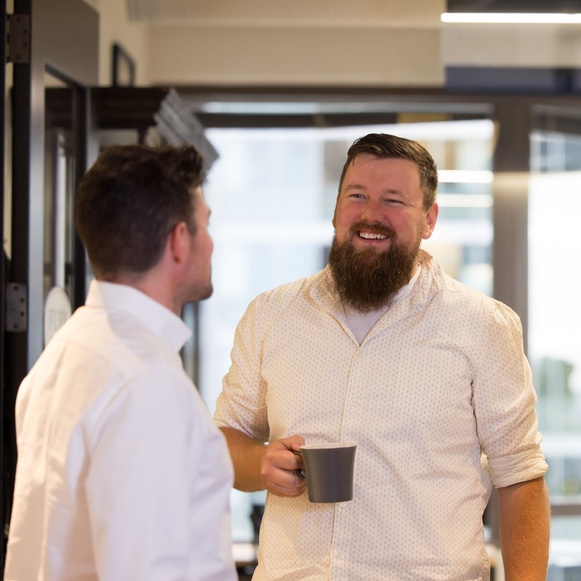
Co-Founder and CEO of Avante
Rohan D'Souza
Co-Founder and CEO, Avante
Rohan D'Souza has spent 18 years building AI products that turn messy healthcare data into something people can act on. Before co-founding Avante, he was Chief Product and Technology Officer at Olive AI, founding product lead at KenSci, where he earned patents in responsible AI, and a population health leader at eClinicalWorks. He grew up in Bangalore, came to the US on a swimming scholarship, studied biology and business at the University at Buffalo, and is based in Seattle, WA.
Benefits are the second largest line item on most large employers' books after salary. Yet the people spending that money, and the employees receiving it, are still making decisions through intranets, tickets, and call centers while the rest of their lives run on AI assistants.
In this episode of What Fuels You, host Shauna Swerland sits down with Rohan D'Souza, co-founder and CEO of Avante, the Seattle AI company behind the benefits agents Carly and Ava. They talk about what a childhood in competitive swimming taught him about stress and burnout, why he waited years to fall in love with the right problem before founding a company, and what he thinks AI should be pointed at instead.
18
Years building healthcare AI products
20%
Of US health systems and payers used AI his Olive AI team built
42%
Of Avante platform traffic arrives when HR is offline
2,000+
Employee size of Avante's core customers
| Time | Topic |
|---|---|
| 00:00 | The consumer and enterprise tech gap: why employees expect at work what AI already gives them at home |
| 01:00 | Rapid fire: a cortado, Afro house, and the "beat yesterday" rule from his swim coach |
| 05:00 | Competing at everything: the race he lost and his mom's lesson about talent versus work |
| 08:00 | Growing up in Bangalore: a corporate caterer mom and an engineer-turned-marketer dad |
| 14:00 | Swimming as a whole life: the scholarship that brought him to the US and what burnout taught him about leading |
| 18:00 | Air samples at the University at Buffalo: a student data project that turned into a campus smoking policy fight |
| 24:00 | Graduating into 2008: joining eClinicalWorks as healthcare records went digital |
| 26:00 | A fear of complacency: leaving Boston for Seattle and KenSci |
| 30:00 | Why most data projects fail: and the long road to deciding to become a founder |
| 33:00 | How Avante started: a dinner with Kellan Carter, a walk with Kabir Shahani, and a lesson from Singapore |
| 37:00 | Who buys Avante: global employers above 2,000 people, and the story behind naming the agents Carly and Ava |
| 41:00 | The market moment in benefits: supply consolidation, self-funded plans, and too much choice for employees |
| 44:00 | Pricing, privacy, and the halo effect: why some HR leaders say they no longer need a benefits survey |
| 50:00 | Hiring at a 43-person startup: comfort with change, a builder mindset, and an engineer who ran a sales call |
| 53:00 | The five-year vision and what fuels him: $1.8 trillion in benefits decisions and a reading tip for aspiring founders |
"Beat Yesterday": What Competitive Swimming Taught a CEO About Stress
From about age 9 to 18, Rohan's life revolved around the pool: the food he ate, the places he went, the decisions he made. He swam the Asian circuit as a sprinter, traveled to Korea alone at 10 for a meet, and earned the scholarship that brought him to the US. He's clear that without it, he never would have made it here.
The rule he still lives by came from his coach, who had to rein in a kid who couldn't tell excitement from stress and was always planning for races weeks away. "Beat yesterday" is now one of Avante's company values.
"Rohan, your only job today is to do better than yesterday. Don't worry about tomorrow."
He also hit real burnout in college and chose to step back at 19 so he'd never remember swimming as something he hated. He tells Shauna that experience is exactly why he can spot burnout risk as a corporate leader today, and why stress management comes easier to him than most.
Chasing the "Unsexy Information Asymmetry Problem"
Rohan calls himself a data nerd who once wanted to be an epidemiologist. At the University at Buffalo, his senior-year work had him walking campus capturing air samples outside building doorways, a project that pulled him into health policy and showed him what moving a mountain feels like. Ask him for the full story on the episode.
Graduating into the 2008 downturn, he found the one sector still growing fast: the digitization of healthcare. He joined eClinicalWorks and stayed until 2017, then moved to Seattle for KenSci and later Olive AI. The thread through all of it is what he calls the unsexy information asymmetry problem, where the data exists but people can't act on it.
"Most data projects fail because they're treated as data projects."
What pushed him out of a company he still praises for how it treats people was a trait he describes plainly.
"My competitiveness has this like paranoia for complacency. So my biggest fear in life is getting comfortable and getting complacent."
Falling in Love With the Problem Before the Idea
Rohan knew he wanted to found a company six or seven years before he did. What held him back was wanting a few more at-bats and a problem worth the next decade of his life. He got comfortable with the risk once he accepted that even a failed company leaves you ahead on what you learn.
"I need to really fall in love with the idea, or really the problem, before I come up with the idea."
The problem arrived through Kellan Carter, a longtime mentor who later led Avante's seed round. Kellan introduced him to Kabir Shahani, who had built two companies and wanted to back the next generation of founders. Over coffee at a Starbucks in Madison Park, Kabir framed healthcare costs as a finance and marketing problem. Rohan heard echoes of work he and Dr. Carly Eckert had done with the government of Singapore on AI behind a health incentive system, except this time the customer was a company instead of a country.
Carly, Ava, and Closing the Consumer to Enterprise Gap
Avante sells mostly to global employers with 2,000 or more people, where benefits are the second largest line item after salary. Two AI agents do the work: Carly answers employees' benefits questions, and Ava tells HR what's working. Carly is named for Avante co-founder Dr. Carly Eckert, an MD, PhD, informaticist, and AI ethicist who, Rohan says, hates it while everybody else loves it.
"The enterprise is seeking solutions that employees are using in their consumer world."
He walks Shauna through why benefits specifically are ripe right now: supply-side consolidation, self-funded employers carving out pieces of their plans, and a flood of choice that leaves employees making uninformed decisions. About 42% of Avante's traffic comes in when HR isn't working, often in people's most vulnerable moments, which is why the team sweats privacy and never uses customer data to train models. He compares the CFO bet on AI today to the enterprise moving from BlackBerry to iPhone.
Hiring for Change and Pointing AI at Real Problems
At 43 people, Avante hires for two things. The first is comfort with the fact that there will be more change than consistency. The second is a builder and growth mindset, illustrated by an engineer who met a prospect at a weekend dinner and ran the sales call herself. Leadership roles stay the hardest to fill, he says, because the stage and the company keep evolving week to week during interviews.
His five-year picture is Avante as something global benefits teams can't run without, with roughly $1.8 trillion moving through HR today no longer decided in the dark.
"I don't think we can just sit back and watch this insane moment that we're in with AI be put to things like a better dancing cat or something like that. Right? Like, let's solve real problems."
5 Key Takeaways
🏊
Beat yesterday, not tomorrow
Rohan turned his swim coach's daily rule into an Avante company value because it keeps a fast-moving team focused on progress it can control.
🔍
Pick the problem before the idea
He waited years to found a company until he found a problem he'd commit a decade to, and the idea came out of that problem, not the other way around.
📊
Frame data work around decisions
Rohan argues most data projects fail because they're run as data projects instead of efforts to get people information they can act on.
🌙
Employees need answers after hours
With about 42% of Avante's traffic arriving when HR is offline, the questions that matter most often come when no one in the office is there to answer them.
🔄
Hire people who expect change
At a 43-person startup, the people who thrive treat change as the constant, like the Avante engineer who turned a dinner conversation into a sales call.
Rohan D'Souza Avante What Fuels You Shauna Swerland Fuel Talent Employee Benefits Benefits Intelligence HR Tech AI Agents Enterprise AI Healthcare AI Healthcare Data Responsible AI Olive AI KenSci eClinicalWorks Dr. Carly Eckert Kabir Shahani University at Buffalo Startup Founder CEO Startup Hiring Seattle Startups
Frequently Asked Questions
Who is Rohan D'Souza?
Rohan D'Souza is the co-founder and CEO of Avante, a Seattle AI company focused on employee benefits. He has spent 18 years building AI products from healthcare data, including roles as Chief Product and Technology Officer at Olive AI, founding product lead at KenSci, and population health leader at eClinicalWorks. He grew up in Bangalore, India, and came to the US on a swimming scholarship.
What does Avante do?
Avante helps employers make sense of what they spend on benefits and helps employees understand what they get. It runs two AI agents: Carly, which answers employee benefits questions, and Ava, which tells HR teams what is and isn't working. Its core customers are global employers with roughly 2,000 or more employees, priced in bands by company size.
Why are employers adopting AI for employee benefits, according to Rohan D'Souza?
Rohan D'Souza says employees now expect the same AI experience at work that they get as consumers, and the gap between consumer and enterprise tech is widening. He also points to consolidation on the healthcare supply side, which pushes self-funded employers to add more plan options, leaving employees with more choices than they can navigate well.
How does Avante protect employee privacy?
Rohan D'Souza says Avante never uses customer data to train models and keeps its security certifications current. HR leaders see aggregated patterns from Ava rather than which individual employee asked what. About 42% of Avante's traffic arrives when HR is offline, which he says raises the stakes on protecting what employees share.
What fuels Rohan D'Souza?
Rohan D'Souza says hearing customers describe Avante as life-changing for their business fuels him and his team, and he describes himself as a servant leader whose drive comes from being in service of his team. He also recommends Andy Grove's book Only the Paranoid Survive to every aspiring founder.